

Introduction
Few design movements have aged as gracefully as mid-century modern bedrooms. Born in the postwar optimism of the late 1940s through the 1960s, the style married clean lines, honest materials, and a quiet confidence that still feels fresh seventy years later. Nowhere does it translate more naturally than the bedroom, where its emphasis on calm proportions, warm wood, and uncluttered surfaces supports the one thing the room exists for: rest.
The appeal is practical as much as aesthetic. Mid-century pieces were designed for the modest footprints of postwar housing, so they tend to be low, light, and leggy, which makes a room feel larger and airier. The palette draws from nature, so it pairs easily with what you already own. And because the movement prized function, nearly every element earns its place.
Below are sixteen plans for bringing the look into your own bedroom. Some are foundational, such as choosing the right bed or flooring, and others are finishing touches that sharpen the overall effect. Use them together for a full transformation or pick a handful to shift the mood of a room that already works. Each one is written to be adaptable to real homes and real budgets, not just showroom sets.
1. Anchor the room with a low platform bed

The bed sets the proportions for everything else, and mid-century design favors frames that sit close to the floor. Look for a walnut or teak platform bed with a slim, slightly angled headboard and tapered legs that lift it just enough to show floor beneath. The low profile lengthens sightlines and makes ceilings feel higher. If your mattress is thick, choose a frame with a recessed deck so the overall height stays modest and the silhouette stays sleek.
2. Choose a statement walnut dresser

A long, low dresser in medium-toned walnut is arguably the most recognizable piece in the mid-century vocabulary. Prioritize clean drawer fronts, sculpted wood or brass pulls, and splayed or hairpin legs. Six- or nine-drawer lowboys double as a media console or a display surface for a lamp and a plant. Vintage pieces from makers like Lane, Broyhill, or Drexel are plentiful and often more affordable than new reproductions.
3. Build a palette of warm neutrals and one saturated accent

Mid-century rooms are rarely monochrome, but they are disciplined. Start with warm neutrals such as cream, oatmeal, camel, and soft gray, then introduce one confident accent: mustard, burnt orange, teal, olive, or rust. Carry the accent through two or three items at most, perhaps a throw, a chair, and a piece of art, so it reads as intentional rather than scattered. Let the wood tones act as a second accent in their own right.
4. Hang a Sputnik or globe pendant

Overhead lighting is where mid-century design gets playful. A brass Sputnik chandelier with radiating arms, a frosted glass globe, or a cluster of mouth-blown pendants gives the room a sculptural focal point without occupying floor space.
Install it on a dimmer so it can shift from bright and functional during the day to soft and ambient at night. Center it above the bed or at the foot of the room, depending on where you want the eye to land.
5. Add an iconic lounge chair in the corner

Every mid-century bedroom benefits from a place to sit that is not the bed. A molded plywood lounge, a womb-style chair with a matching ottoman, or a sling chair in leather and walnut turns an empty corner into a reading nook. Pair it with a slim floor lamp and a small side table. Choose upholstery in one of your accent tones or in a textured neutral like boucle to add softness against the hard wood edges.
6. Lay down a shag or geometric wool rug

Flooring softens the room and pulls the furniture together. A cream or ivory shag rug nods directly to the 1960s and feels wonderful underfoot first thing in the morning.
For a crisper look, choose a flat-weave wool rug with a large-scale geometric motif in two or three colors from your palette. Size it so the front legs of the bed and any nightstands rest on it, which visually unifies the sleeping zone.
7. Install floating nightstands

Wall-mounted nightstands keep the floor clear and reinforce the airy, low-slung feel of the room. Choose walnut or oak boxes with a single drawer and a small shelf below, mounted at mattress height.
The exposed floor beneath makes a compact bedroom feel noticeably larger and simplifies cleaning. Run cords through a grommet in the back so lamps and chargers stay tidy.
8. Style with large-leaf plants
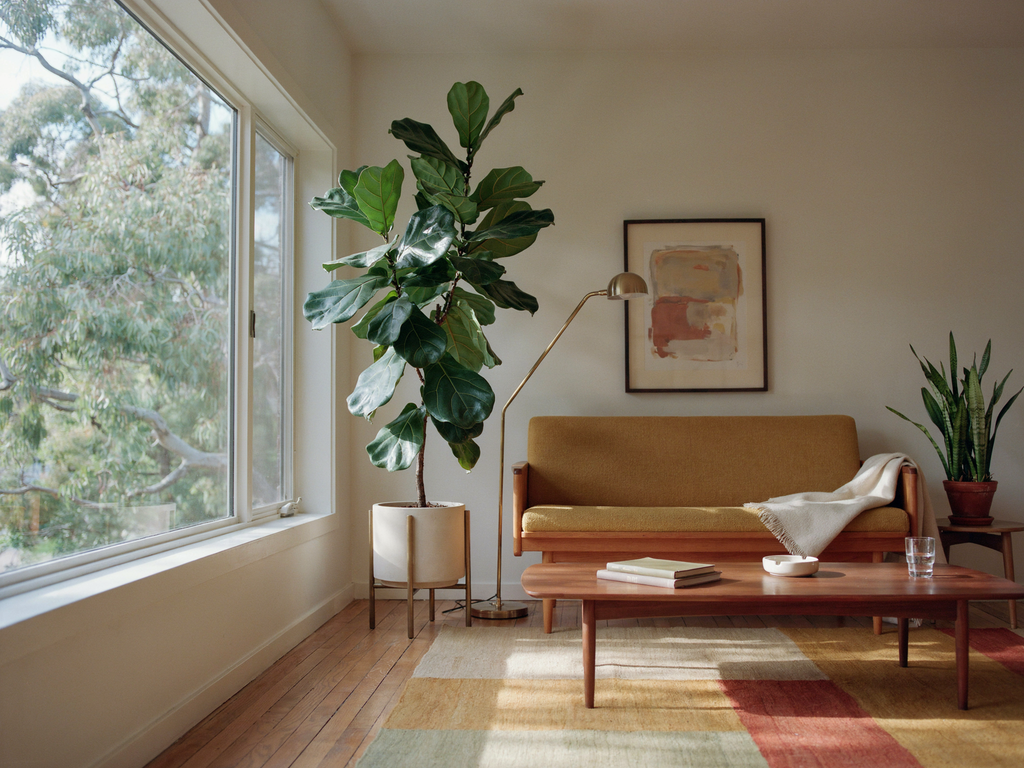
Greenery was central to the indoor-outdoor ethos of mid-century architecture. A fiddle-leaf fig, rubber plant, or monstera in a simple ceramic or fiberglass planter brings height and organic shape into a room full of straight lines. A tall snake plant works where light is limited.
Set planters on a low stand or plant pedestal in brass or wood to lift them off the floor and echo the leggy furniture around them.
9. Commit to abstract or graphic wall art

Mid-century art leans toward bold color fields, abstract shapes, and stylized botanical prints. Choose one oversized canvas above the bed or a tightly spaced grid of smaller framed prints above the dresser. Thin walnut or black frames keep the presentation clean.
Avoid overly literal imagery; the goal is to add rhythm and color, not narrative. Original screenprints and vintage exhibition posters are affordable ways to add authenticity.
10. Warm the walls with wood paneling or a slatted feature wall
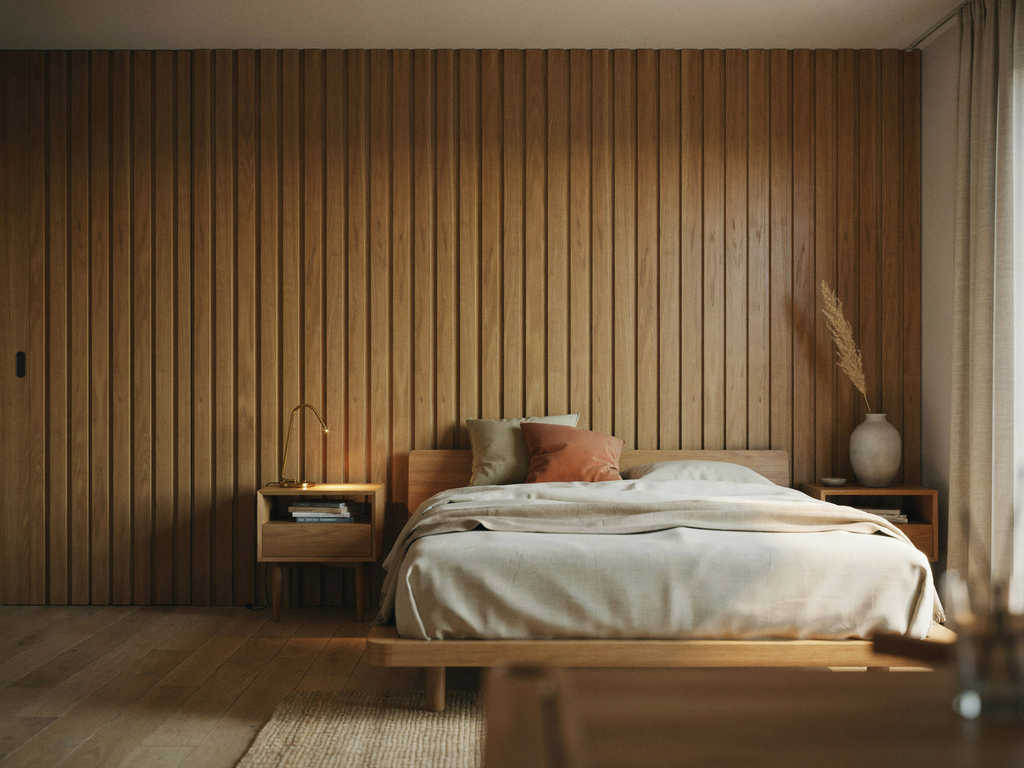
Vertical wood slats or a full paneled wall behind the bed instantly signal the era while adding texture and acoustic softness. Walnut veneer is the classic choice, but white oak reads lighter and more contemporary. Keep the slats evenly spaced and run them floor to ceiling for maximum effect.
If a full wall is too much, a slatted headboard panel spanning the width of the bed and nightstands delivers much of the same impact.
11. Layer textured textiles in natural fibers

Bedding should feel as thoughtfully considered as the furniture. Start with crisp white or ivory linen or percale, then layer a woven cotton coverlet and a wool or alpaca throw folded at the foot of the bed.
Introduce pattern sparingly with a lumbar pillow in a geometric print or a tufted velvet cushion in your accent color. The mix of smooth and nubby textures keeps the restrained palette from feeling flat.
12. Use brass and black metal accents

Metal finishes add polish and definition. Brass drawer pulls, lamp bases, and picture frames bring warmth that complements walnut beautifully.
Black steel in hairpin legs, curtain rods, or a slim mirror frame provides contrast and grounds the composition. Mix the two with intention: brass for the pieces you want to glow, black for the pieces that should recede or outline.
13. Add a sunburst or asymmetrical mirror
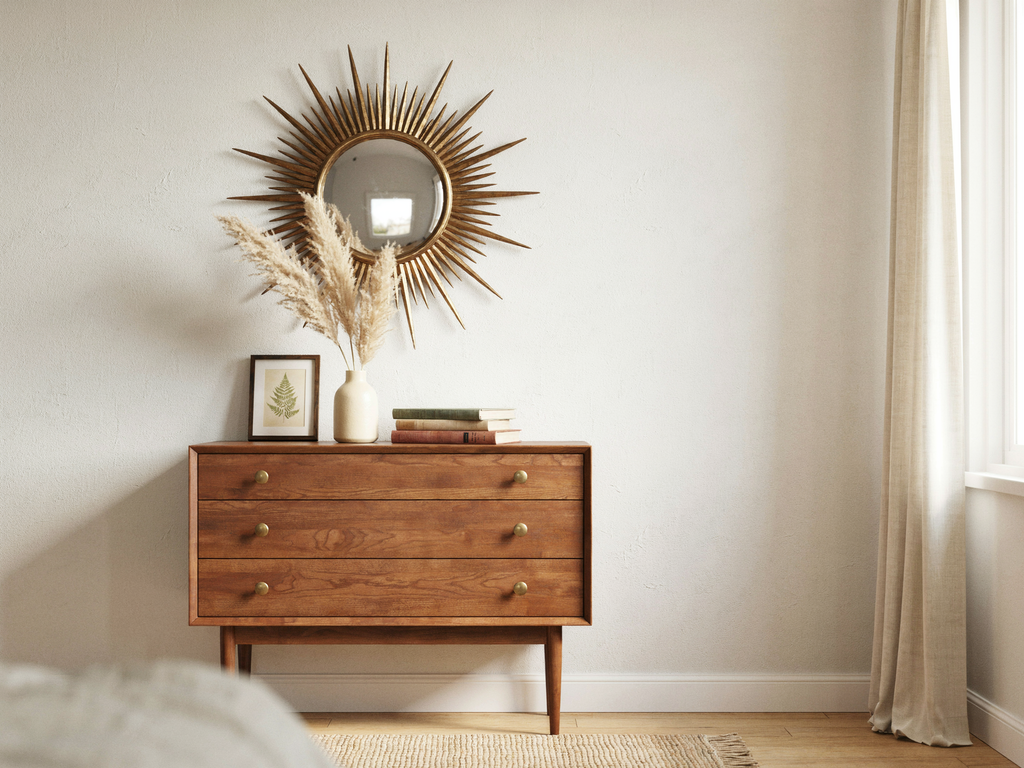
A sunburst mirror in brass or gilt wood is a mid-century staple that bounces light and introduces a radial shape into a room of rectangles. Hang it above the dresser or on a wall opposite a window to amplify daylight. For a quieter option, choose an asymmetric or organically shaped mirror with a thin walnut frame. Either way, a single well-placed mirror can make a small bedroom feel twice as bright.
14. Swap heavy drapes for linen panels or wood blinds

Window treatments in this style are light and architectural. Floor-length linen panels in oatmeal or white hung from a slim black or brass rod let light filter through while framing the window.
Alternatively, wooden Venetian blinds in a tone that matches your furniture reinforce the horizontal lines of the room. Mount hardware close to the ceiling to draw the eye upward and make the window appear taller.
15. Introduce curved, sculptural accents

Too many straight edges can make a room feel rigid, so counter them with a few curves. A kidney-shaped side table, a biomorphic ceramic vase, a tulip-base stool, or a rounded upholstered bench at the foot of the bed softens the geometry. Mid-century designers used these organic forms deliberately, and even one or two pieces introduce a sense of ease and movement.
16. Edit ruthlessly and leave breathing room
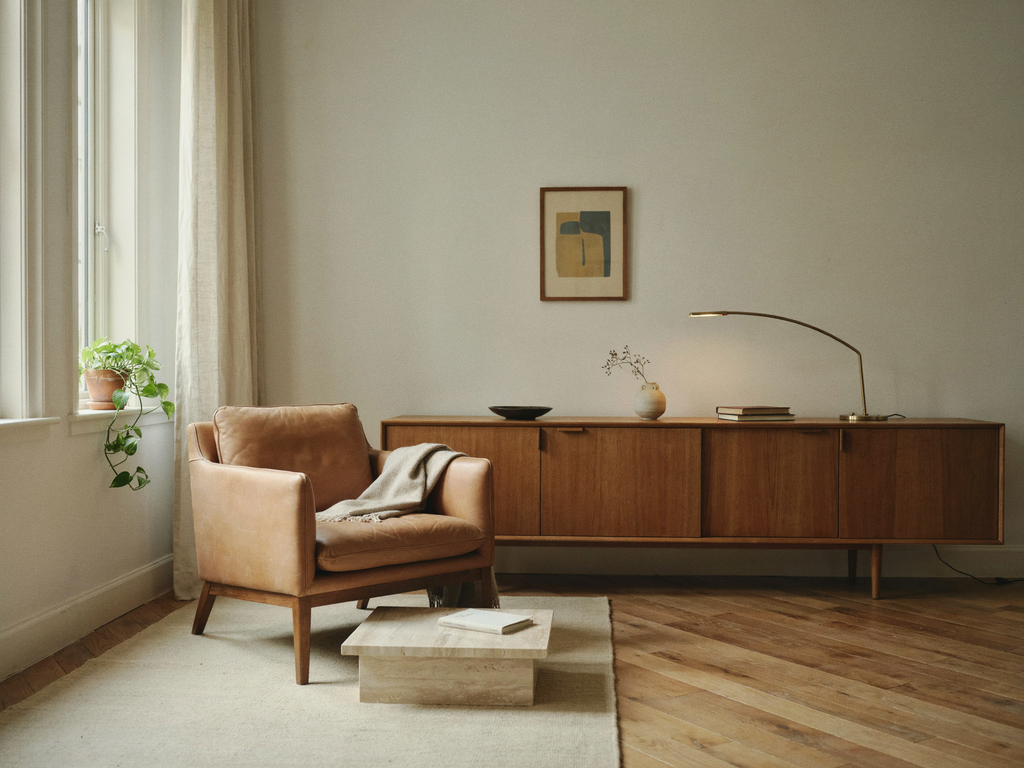
The final plan is about restraint. Mid-century interiors succeed because every object is visible and purposeful, and that requires space between things. Clear surfaces down to a lamp, one book, and one object. Resist the urge to fill every wall.
Choose closed storage over open shelving where you can. Negative space is not emptiness; it allows the lines of the furniture, the grain of the wood, and the color of the accents to register fully.
Conclusion
Mid-century modern endures because it was never really about a decade. It was about proportion, material honesty, and the belief that a well-designed room should make daily life easier and more pleasant. Those principles are as relevant in a 2026 bedroom as they were in a 1958 ranch house, which is why the style adapts so readily to contemporary tastes and mixed collections.
You do not need all sixteen plans to get there. A low walnut bed, a disciplined palette, one piece of sculptural lighting, and generous breathing room will carry most of the look on their own. Add plants, texture, and a single accent color, and the room begins to feel collected rather than staged. The rest can arrive over time, one thoughtful piece at a time, which is exactly how the best mid-century rooms have always come together.