

Introduction
Mid-century modern design has outlasted nearly every interior trend of the past seventy years, and the bathroom is one of the rooms where it performs best. The style emerged from the postwar housing boom of the late 1940s through the 1960s, when architects and designers were tasked with making compact, affordable homes feel open, bright, and livable.
As an Amazon associate, we may earn a commission if you make a purchase through these links and other affiliate programs.
The resulting vocabulary of clean lines, honest materials, warm wood, and restrained color translates remarkably well to a space that is often small, frequently humid, and heavily used.
What distinguishes mid-century modern from other contemporary styles is its warmth. Many modern bathrooms lean on cool grays, polished chrome, and high-contrast lighting that can feel clinical.
The mid-century approach favors walnut and teak, matte and textured surfaces, brass and black finishes, and lighting in the warm range. The effect is a room that reads as calm and considered rather than stark.
The style is also practical. Floating vanities and open sightlines make floor area feel larger. Simple geometric tile patterns add interest without visual clutter. A disciplined palette means fewer decisions and a more cohesive result. For homeowners working with limited square footage or a modest budget, these principles offer a clear framework for making decisions.
The 21 ideas below are organized in three groups: foundational elements such as vanities, tile, and color; fixtures, lighting, mirrors, and hardware; and finishing touches including textiles, plants, and art. Each entry includes specific guidance on materials, proportions, and common pitfalls.
Some are weekend projects; others require a contractor and a renovation budget. Taken together, they provide a complete roadmap for designing or refreshing a bathroom in the mid-century modern style.
Foundations: Vanities, Wood, Tile, and Color
1. Install a floating walnut vanity

A wall-mounted vanity in walnut or teak is the most recognizable element of a mid-century modern bathroom and the highest-impact single change available. The warm wood tempers the hard surfaces of tile and porcelain, and the open space beneath the cabinet extends the visible floor, making a small room feel larger.
Wall-mounting requires solid blocking behind the drywall, so it should be planned during a renovation. If that is not feasible, a freestanding vanity with tapered or angled legs achieves a similar effect. Choose flat-front drawers with slim bar pulls or integrated finger pulls, and avoid raised panels or decorative hardware. Because bathrooms are humid environments, specify a durable finish such as marine-grade varnish or a quality polyurethane to protect the wood over time.
Related Product
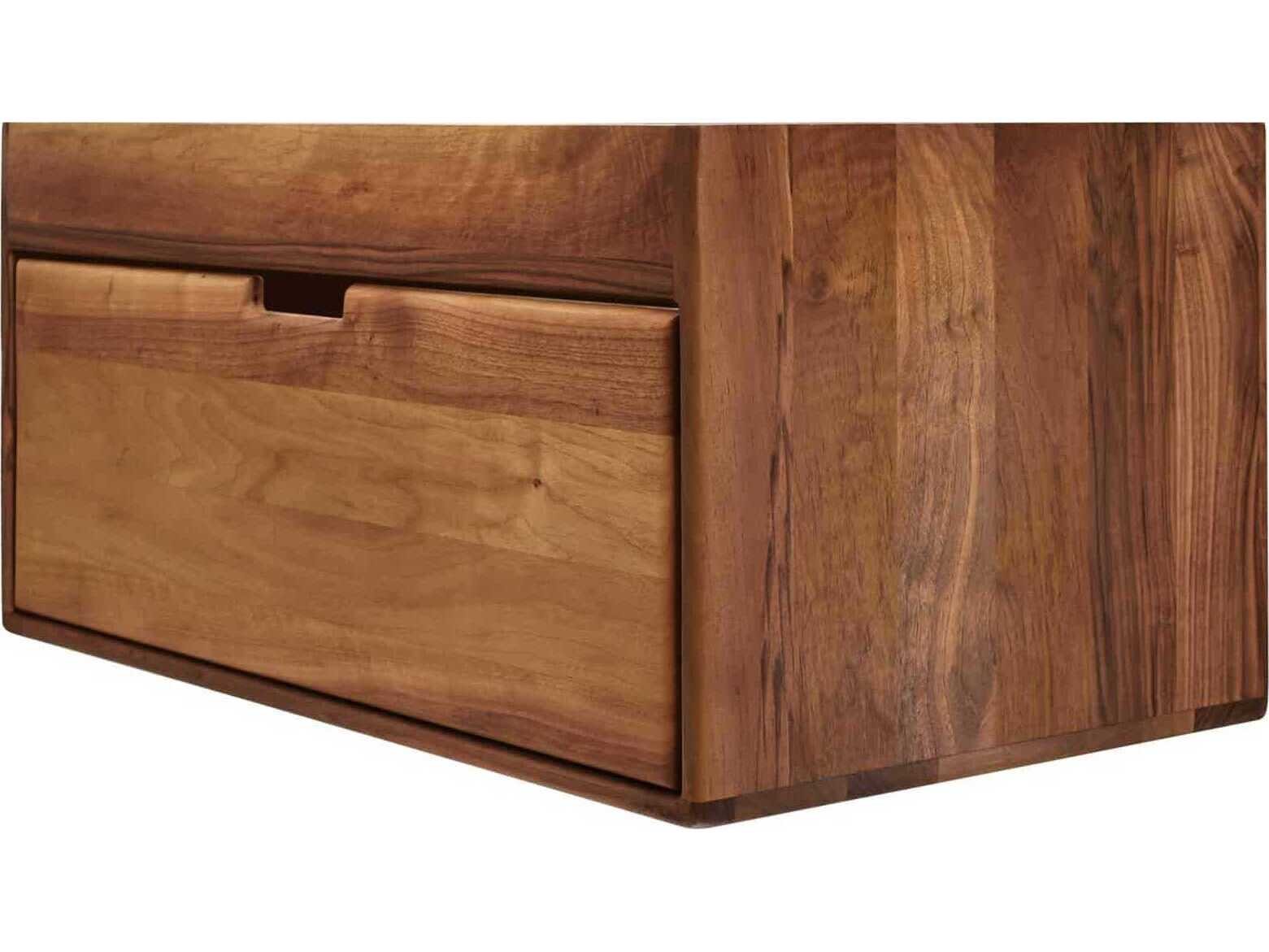
Floating walnut vanity with mid-century style and a soft-close drawer.
2. Commit to a single wood tone

Multiple competing wood finishes in a small room undermine the cohesion that defines the style. Select one species or stain, typically a medium warm brown such as walnut or teak, and apply it consistently across the vanity, shelving, and any mirror frame.
If existing flooring or cabinetry cannot be changed, match new elements to it. Consistency reads as intentional and elevates the perceived quality of the space regardless of budget.
3. Lay a geometric tile floor

Mid-century bathrooms frequently used patterned floors. Hexagon, elongated hexagon (picket), and penny-round mosaics in a two-tone scheme are all period-appropriate. A predominantly white hexagon floor with a border or scattered accent in black, charcoal, or a muted green is a reliable choice.
In smaller bathrooms, keep tile dimensions modest and patterns simple. Large-format tile can overwhelm a compact room, and dense patterns tend to make the space feel smaller. Reserve more dramatic layouts for powder rooms, where the limited footprint can support a bolder statement.
4. Use vertically stacked tile
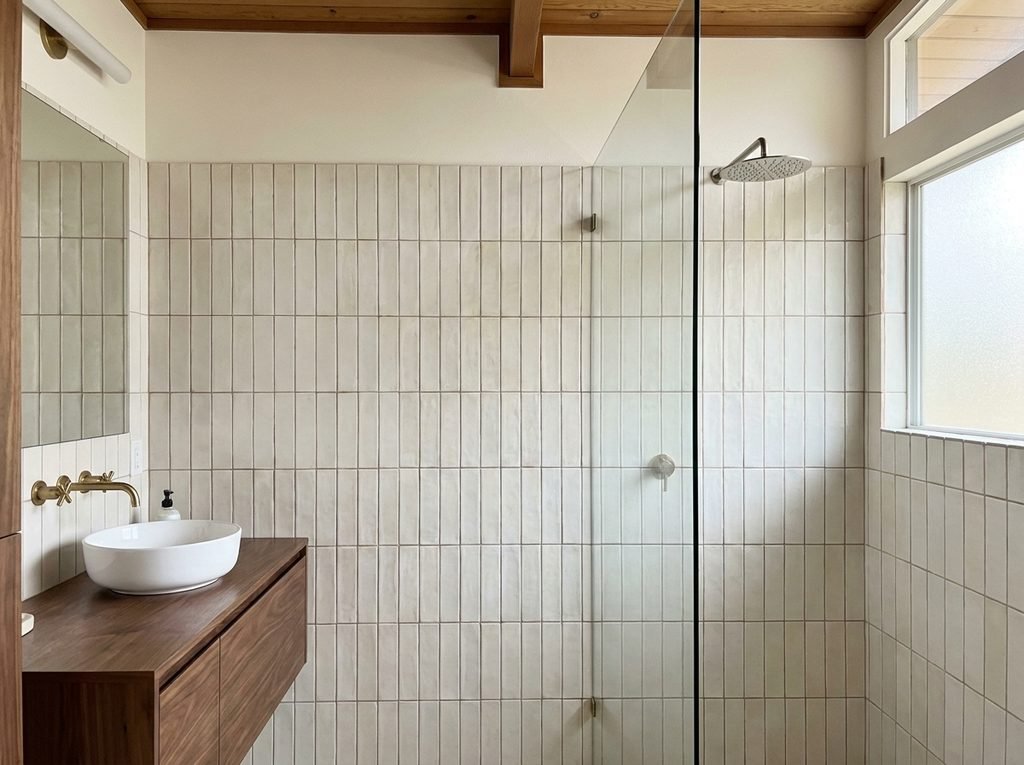
Stacked tile, in which rectangular tiles are aligned in a straight grid rather than offset in a running bond, is a distinctly mid-century alternative to subway tile. Installed vertically, it draws the eye upward and visually raises the ceiling. Installed horizontally, it widens the room.
Matte finishes are more authentic to the period than high gloss, and tile with slight handmade variation adds organic warmth. Formats of 2 by 8 inches or 3 by 12 inches work well on walls and shower surrounds.
5. Draw from the mid-century color palette

The period’s palette is more sophisticated than its reputation suggests. Core colors include mustard, burnt orange, teal, olive, dusty pink, and the blue-green range between aqua and sage. The excesses associated with avocado and harvest gold belong largely to the 1970s and can be set aside.
In a bathroom, the most effective approach is a single saturated color used deliberately against white and wood: a painted vanity, one tiled wall, or textiles in a strong hue. Combining several accent colors in one small room typically reads as thematic rather than refined.
6. Incorporate terrazzo
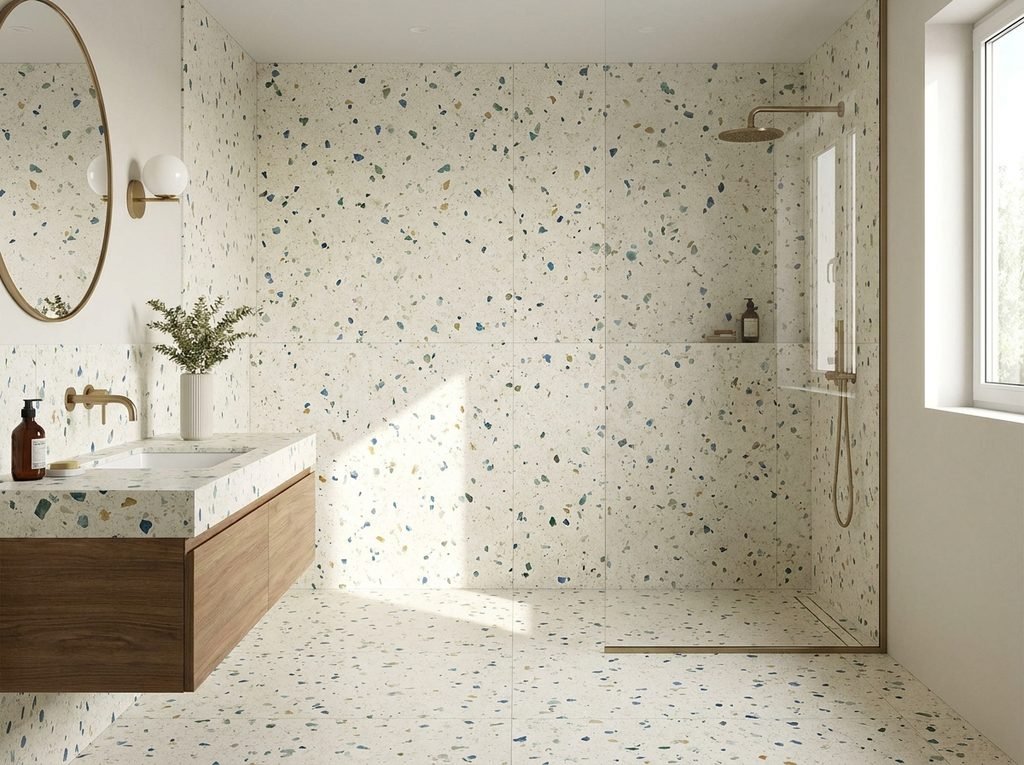
Terrazzo was a common countertop and flooring material in homes of the 1950s and 1960s and has returned to prominence. Its speckled aggregate of marble, quartz, or glass set in a cement or resin binder provides texture and subtle color without an overt pattern. It is suitable for counters, floors, and shower walls.
Poured-in-place terrazzo is expensive and heavy. Terrazzo-look porcelain tile delivers most of the visual effect at a fraction of the cost, is easier to install, and requires less maintenance.
7. Add a wood slat accent wall or ceiling
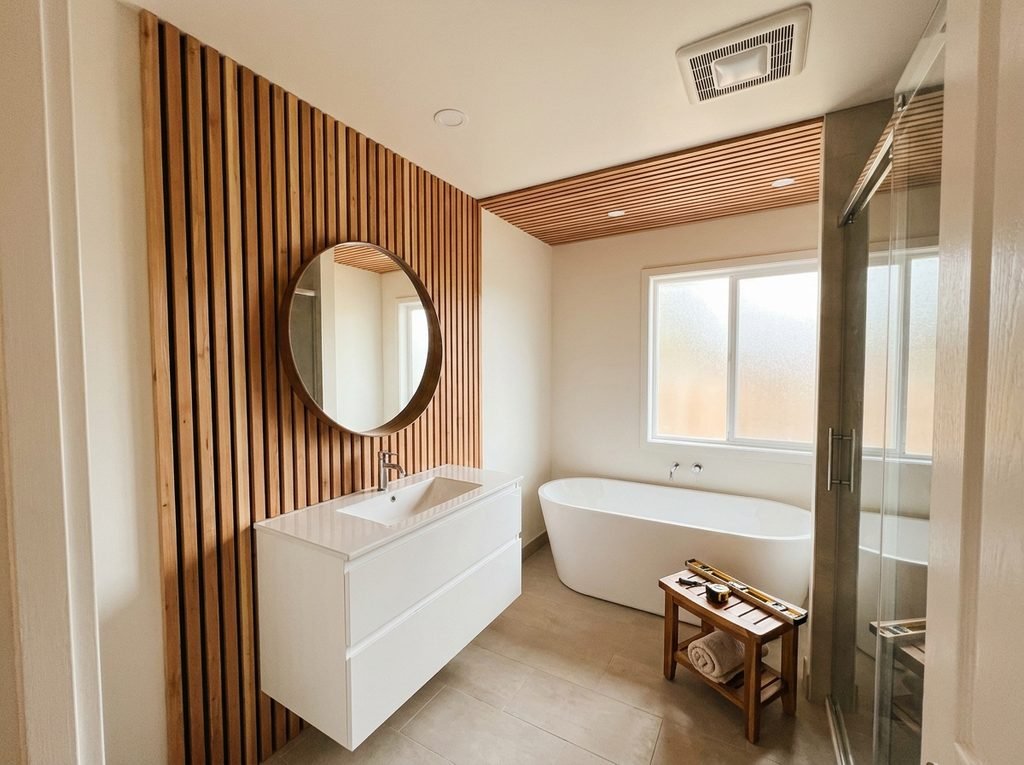
Where a full vanity replacement is impractical, a slatted wood feature introduces comparable warmth. Narrow vertical slats behind the vanity, on a half wall, or across the ceiling above a tub create rhythm and shadow characteristic of the period.
Use a moisture-tolerant species such as cedar or thermally modified ash, keep slats outside the direct spray zone of the shower, and confirm that the exhaust fan is adequately sized for the room. This is a manageable project for an experienced DIYer.
Fixtures, Lighting, Mirrors, and Finishes
8. Select a Sputnik or globe light fixture

Lighting is one of the most expressive elements of mid-century design. The Sputnik chandelier, with its radiating arms and exposed bulbs, is the signature fixture of the era, though its scale can overwhelm a small bathroom. A cluster of frosted glass globes, either as a semi-flush ceiling mount or as pendants flanking the mirror, offers a more proportionate alternative.
Verify that any fixture carries a damp-location rating appropriate for bathroom use. Specify bulbs in the 2700K to 3000K range; cooler color temperatures flatten wood tones and work against the warmth the style depends on.
Related Product

Modern 5-light brass chandelier with frosted glass globes.
9. Hang a round or capsule-shaped mirror
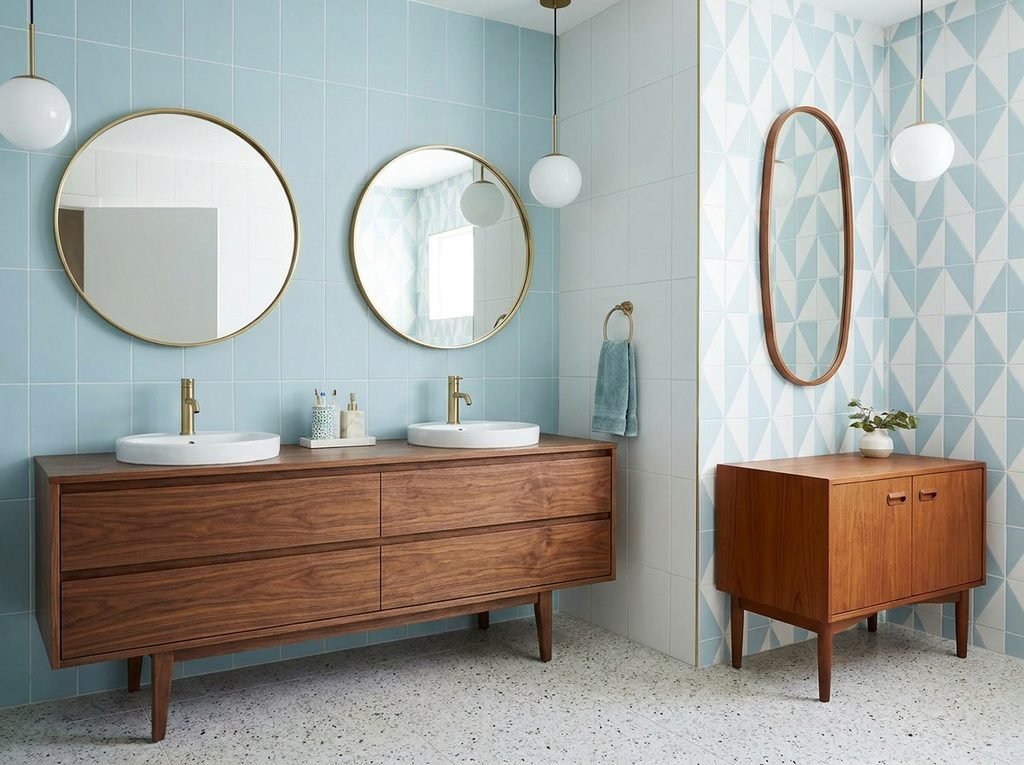
Mid-century mirrors favor soft geometry. Round, oval, and elongated capsule shapes are all appropriate, while sharp-cornered rectangles read as contemporary and ornate frames read as traditional. If a frame is used, a thin band of wood or brass is sufficient.
A round mirror should be slightly narrower than the vanity below it. Above a double vanity, two matching round mirrors provide balance and define individual zones. Mount the mirror so its center sits at approximately 60 to 65 inches above the finished floor.
Related Product

Gold oval accent mirror, 18″ × 24″.
10. Specify brass or matte black fixtures

Chrome is the default finish in most bathrooms and the one least associated with the style. Brushed or satin brass complements wood and adds warmth; matte black provides graphic contrast against white tile. Both are well documented in mid-century interiors.
Apply the chosen finish consistently to the faucet, shower trim, towel bars, paper holder, cabinet pulls, and where possible the light fixture. Mixed metals can succeed in professionally designed spaces, but a single finish is the more reliable approach.
Related Product
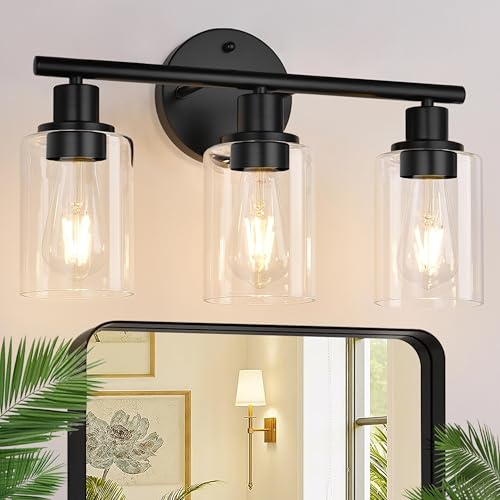
Black 3-light vanity fixture with clear glass shades.
ADVERTISEMENT

11. Choose a faucet with architectural lines

Period faucets are notably restrained: simple spouts, cylindrical or square bodies, and lever handles rather than cross handles. A wall-mounted faucet is especially authentic and frees counter space, though it requires relocating supply lines into the wall and should be planned during a renovation.
Avoid heavily curved profiles, decorative detailing, and waterfall-style spouts, which belong to other design periods.
12. Consider a wall-mounted or vessel sink
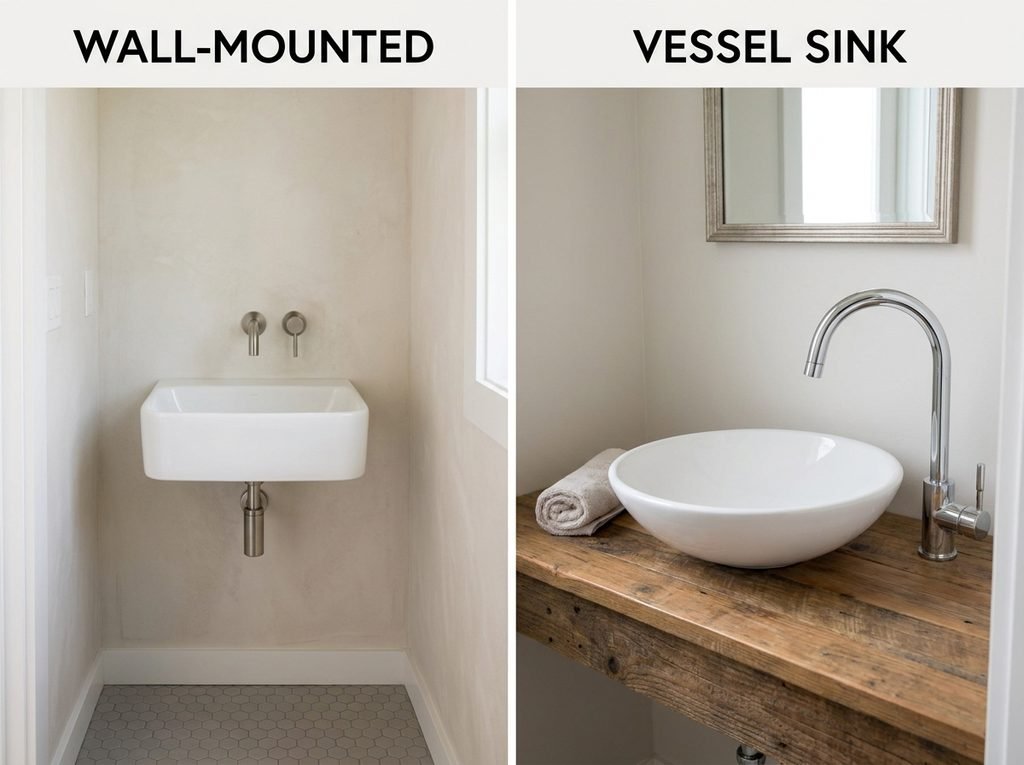
In powder rooms or very small bathrooms where a vanity is impractical, a wall-mounted sink with a soft rectangular or trough profile is consistent with the style. Where a counter is present, a shallow round or oval vessel sink in white porcelain pairs well with a wood top.
Vessel sinks are prone to splashing. Choose a wide, shallow bowl rather than a tall, narrow one, and confirm the faucet spout reaches the center of the basin.
13. Replace cabinet hardware
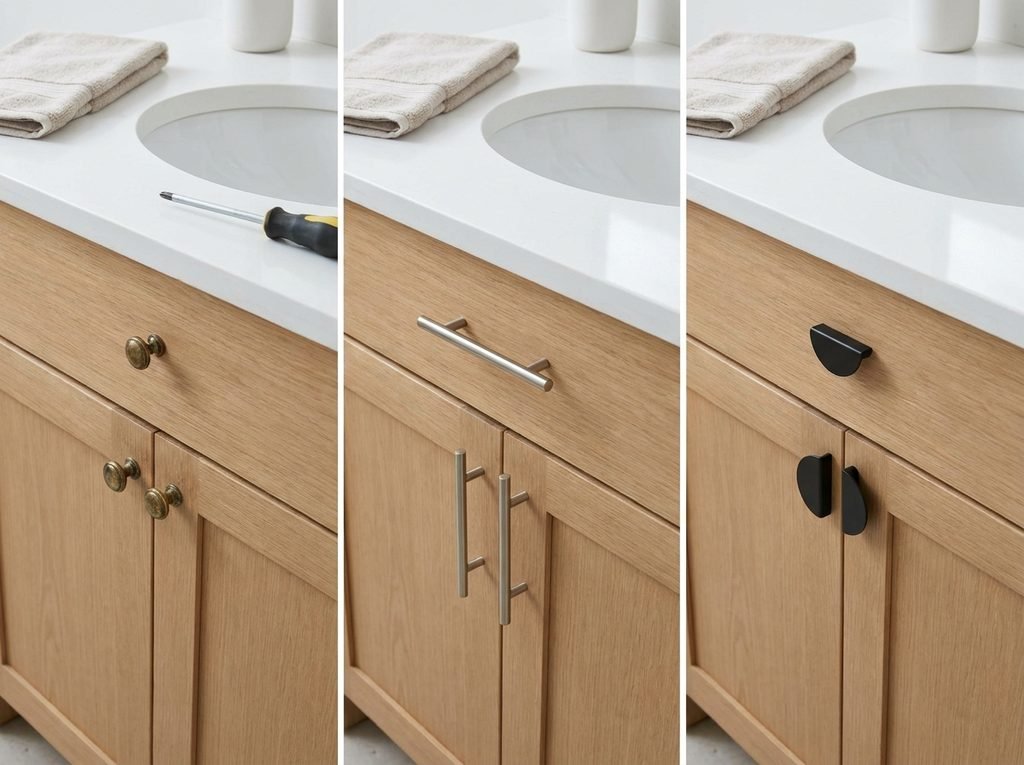
Updating cabinet hardware is the least expensive and fastest change on this list and has a disproportionate effect on the room. Replace existing pulls with slim bar handles, half-moon finger pulls, or tapered wood knobs in the chosen metal finish or in wood matching the vanity. The project requires a screwdriver and takes less than an hour.
14. Frame the shower with slim black metal or go frameless
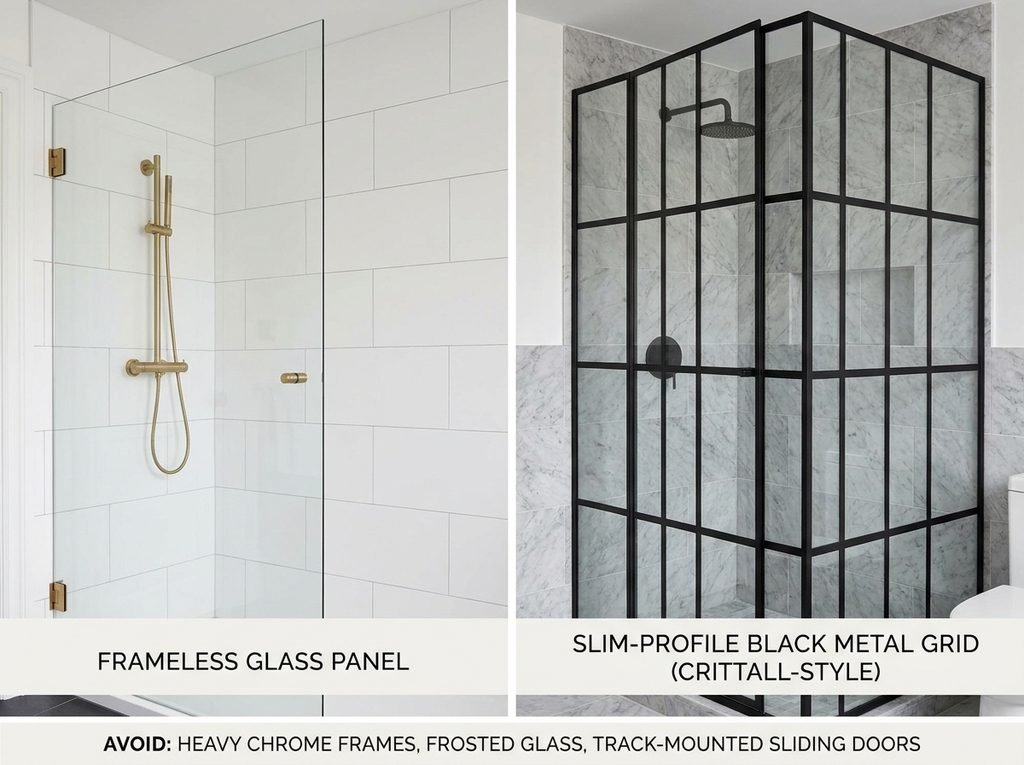
Two enclosure styles suit the period. A frameless glass panel recedes visually and allows the tile to carry the room. A slim-profile black metal grid, often described as crittall-style, adds structure that echoes the clean lines elsewhere.
Avoid heavy chrome frames, frosted or textured glass, and track-mounted sliding doors, all of which add visual noise and date the room in the wrong direction.
Finishing Touches: Textiles, Plants, Art, and Accessories
15. Use a flatweave rug

A small flatweave rug in a geometric pattern, such as chevrons, diamonds, or stripes in mustard and cream or black and oatmeal, is more consistent with the style than a plush bath mat and gives the room a finished appearance. Cotton and wool are preferable for breathability. Place a non-slip pad underneath.
For absorbency, position a plain mat directly outside the shower and keep the patterned rug near the vanity, where it will stay drier.
Related Product

The **nuLOOM Elfriede Area Rug**, measuring **7'6" × 9'6"**, features a natural flatweave design that adds neutral style and texture to any room.
16. Choose towels in solid, saturated colors
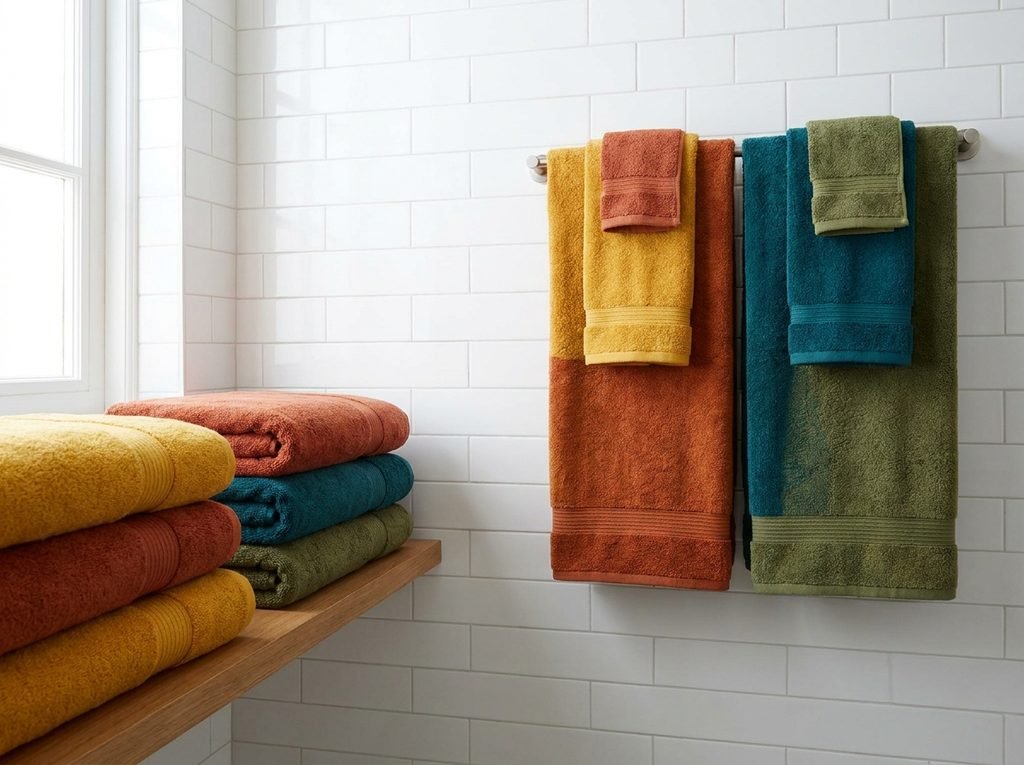
Towels are the simplest vehicle for introducing accent color. Select solids without patterns, embroidered borders, or decorative trim. Mustard, rust, teal, or olive against white tile is effective. Fold them simply or hang them on a single bar.
Purchasing two matching sets ensures the color scheme remains consistent through the laundry cycle.
17. Add a sculptural plant

Houseplants are closely associated with mid-century interiors. Suitable choices include fiddle-leaf fig, rubber plant, snake plant, and trailing pothos on a high shelf. Bathrooms with natural light are ideal, as most of these species benefit from humidity.
In a windowless bathroom, a snake plant tolerates low light, and a high-quality artificial plant is an acceptable alternative. In either case, use a period-appropriate container: a simple cylinder, a tapered bullet planter, or a footed ceramic pot in a matte glaze.
18. Hang abstract or botanical art

Art adds a sense of completion to a bathroom and mid-century pieces are widely available at accessible price points. Abstract prints with organic shapes and a limited palette, mid-century botanical illustrations, and simple line drawings all suit the style. One well-chosen piece in a thin wood or black frame is more effective than a gallery arrangement in this setting.
Use frames with glass or acrylic glazing, hang work away from direct shower spray, and in rooms with limited ventilation, prefer reproducible prints over original or irreplaceable work.
Related Product

Set of four unframed 8×10-inch botanical prints featuring mustard-yellow flowers in a vintage, mid-century modern style—ideal for living room or bedroom décor.
19. Display ceramics deliberately
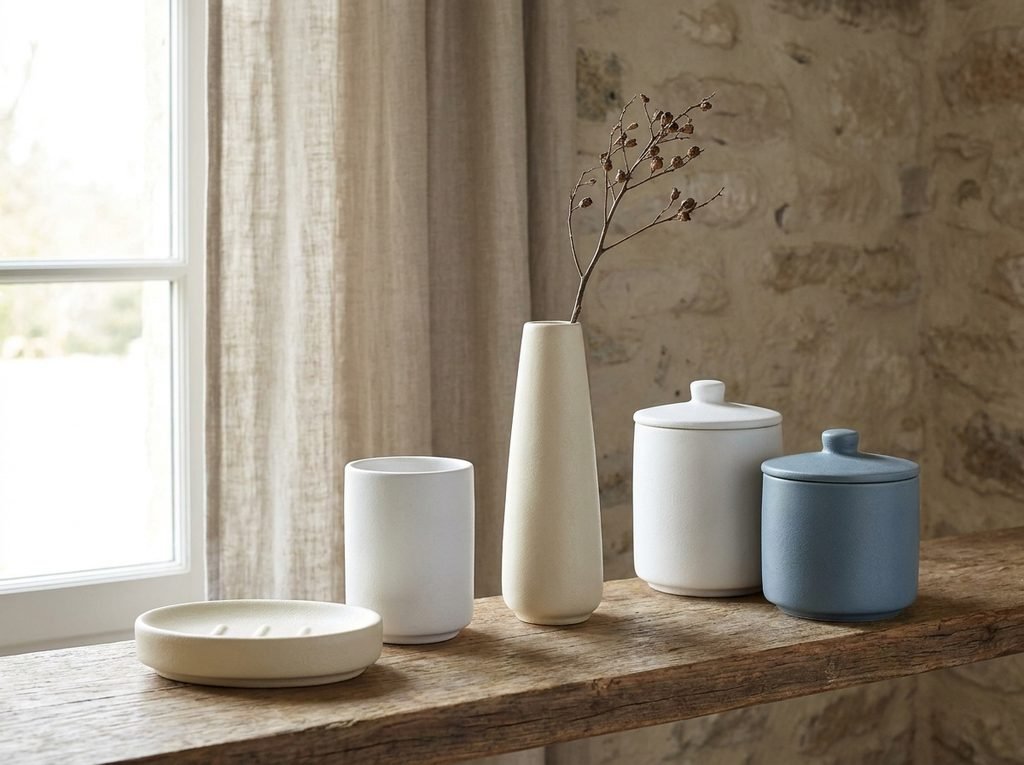
A small collection of matte-glazed ceramics — a soap dish, a toothbrush cup, a bud vase, a lidded jar — in white, cream, or a single accent color provides texture and continuity. Group pieces in odd numbers and allow space between them. These items are decorative; everyday toiletries belong in a drawer.
Ceramics with speckled or textured glazes complement terrazzo and feel warmer than glossy porcelain.
20. Limit open shelving

A single floating wood shelf above the toilet or beside the mirror provides a place for a plant, ceramics, and a rolled towel. One or two shelves are sufficient. Mid-century design relies on negative space, and a bathroom with uncluttered surfaces feels more serene than one where every surface is occupied.
Match the shelf to the vanity wood and use concealed brackets so the shelf appears to float.
21. Install a dimmer
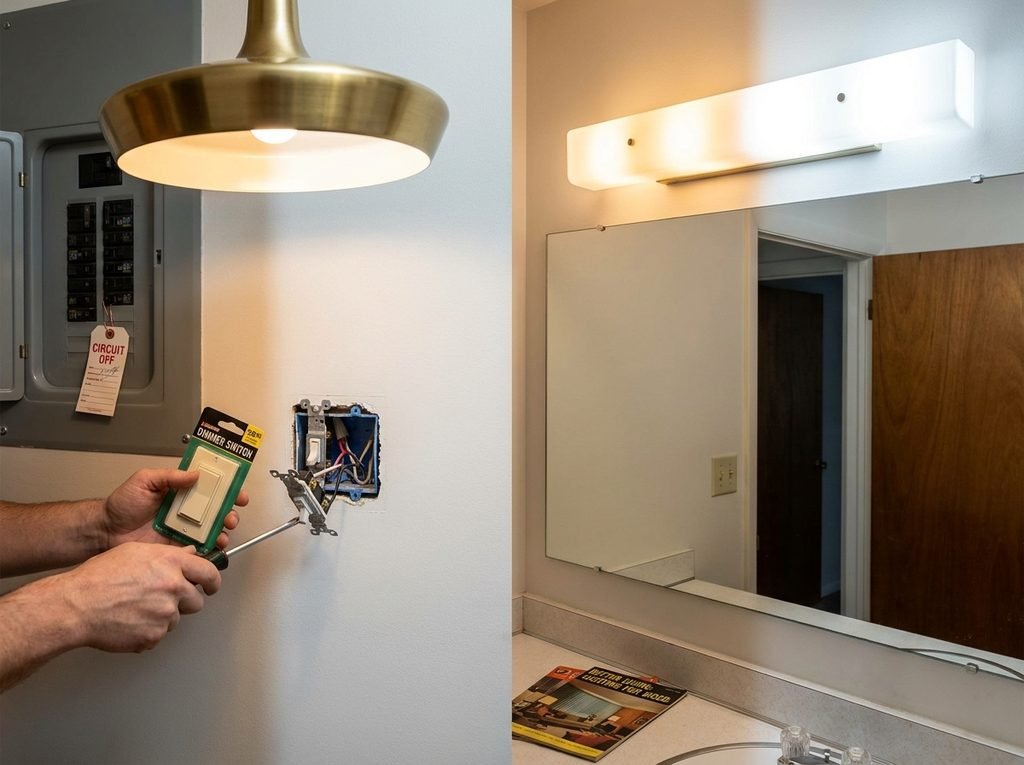
Placing overhead and vanity lighting on a dimmer is an inexpensive change with a significant effect. Reduced lighting in the evening shifts the room from functional to restful, and the cost is typically under thirty dollars plus a brief installation (with the circuit switched off at the panel). The mid-century ethos was concerned with how a space feels in use, not only how it appears, and lighting control is the most direct way to honor that principle.
Conclusion
The 21 ideas above cover the full scope of a mid-century modern bathroom, from structural decisions to final styling. Three principles underlie all of them.
First, selectivity matters more than completeness. The most successful mid-century bathrooms incorporate five or six of these elements executed well, not all twenty-one. Prioritize the changes that address a specific shortcoming in the existing space — poor lighting, a dated vanity, a cold palette — and defer the rest.
Second, warmth is the organizing principle. When choosing between two options, the warmer one is almost always correct: wood over laminate, brass over chrome, a saturated textile over a neutral one, a 2700K bulb over a 4000K bulb. Mid-century modern is frequently confused with colder minimalist styles, but its defining quality is a clean, generous, and human character.
Third, the style was designed to be adaptable. Its original practitioners were working within the constraints of ordinary homes and ordinary budgets, and the framework they developed rewards thoughtful substitution. A bathroom that follows these principles with its own palette, plants, and proportions is not a compromise; it is the style applied as intended.
Whether the project is a full renovation or a weekend refresh of hardware and textiles, these ideas provide a reliable starting point for a bathroom that is both functional and enduring.